Suzanne and I, and a Louisiana Recovery Field Office friend, Bob Miller, enjoyed a GREAT combined New Year's Eve service with the predominantly black Franklin Avenue Baptist Church and First Baptist Church, with Pastor Fred of Franklin Avenue preaching. He preached on Acts 27:41-44.
41And falling into a place where two seas met, they ran the ship aground; and the forepart stuck fast, and remained unmoveable, but the hinder part was broken with the violence of the waves.
42And the soldiers' counsel was to kill the prisoners, lest any of them should swim out, and escape.
43But the centurion, willing to save Paul, kept them from their purpose; and commanded that they which could swim should cast themselves first into the sea, and get to land:
44And the rest, some on boards, and some on broken pieces of the ship. And so it came to pass, that they escaped all safe to land.
I am overwhelmed at what this man of God discerned from these verses. He spoke to the people who had lost everything or much in Katrina. He said that 2006 was a tulmultuous 2006, but he challenged everyone to "pass over to 2007, even on broken pieces."
"We've been shipwrecked. But we are to cross over:
BY FAITH - He said those who were spiritually mature should "jump in first" exercising mature faith.
BY GRACE - There are those who can grab hold of the boards from the ship - boards God prevented from floating out of reach. People came to your aid. That's God. Some were given money they didn't work for. That's God. People came down from every state and someone restored your home. That's God. Electrians and roofers. That's God. Those are the "boards" he provided.
BY MERCY - Some of us don't deserve to be rescued. These are the ones who have one foot in the church and one in the world. Their lives show no evidence of a godly character. But God showed you mercy and you were able to cross over to dry land by hanging onto "broken pieces."
And God said that ALL would pass over to dry land. Not just the ones who have money. Not just the ones who are considered spiritual giants. But he offers the safety of dry land to ALL.
Who is ready to cross over to 2007, even on broken pieces? Who is willing to commit their lives to their Savior?
...A number did. They went to the front, the pastor came down the steps to welcome them and the packed crowed of 1,700 clapped and cheered.
It was a service to remember!
Monday, January 01, 2007
Sunday, December 24, 2006
Latest story of a man of faith

He helps residents get on with lives
after they ‘benefit’ from disaster
Story and photos by Dave Harris, Public Affairs
Louisiana Recovery Field Office
A lesser person would, by now, be exhausted. But
Gerald Townsell keeps at it - singing, calling, observing,
reporting, talking.
"I'm a talker," he admits. But check his schedule and
one sees that he walks the talk.
As quality assurance field supervisor in New Orleans'
west bank, Gerald firmly but politely redirects a crew
away from an easy debris pick-up and has them focus on
the more unsightly mess 50 yards away in the public
right-of-way.
During a break in his seven-day-a-week schedule, he
takes a quick call from his pastor at the Church of God in
Christ where he is chairman of the Board of Trustees. It's
a grounds maintenance challenge. Next month he goes to
his church's leadership conference in Orlando, Fla., on his
own nickel - make that his own 20,000 nickels, an annual
trek somewhere in the country he's repeated at least six
times.
Back to making sure QAs are checking licenses and
paperwork. Someone's truck has leaking equipment. Shut
'em down - temporarily.
Next free moment, probably late at night, get ready to
play Santa at Memphis' adopted school, Ford Elementary.
Decide what to sing at the Christmas party.
Before that, a demo crew knocks a utility line down.
Fill out another report.
Check the load ticket tally. More calls. Send in a
report on 30-60-90-day planning. Finish the "this-weeknext-
week" report. Jot down an idea for after-duty preparation
of a Bible lesson. Talk to Kenner. Talk to the resi-
dent engineer, Kevin Blair, about next week's demolition
schedule.
"Gerald likes being in charge," Blair says. "He runs
the west bank. Everything runs smoothly. I hear about big
problems, and there aren't many of those, and so I don't
hear much from him."
Someone asks Gerald, "I understand you also sing in
the choir."
"No more," he says. "I did." He sighs. "It was getting a
bit too much."
Oh, he still sings. Just not in the choir anymore.
Gerald is an operatic singer who studied at the Settlement
Music School, Queen Village in Philadelphia, what locals
call "South Philly." More recently he sang male lead in
Porgy and Bess and in "An Evening with George
Gershwin."
At church he and his trustees take people in and find
them a place to stay, between overseeing grounds-keeping
and church-building, with its checks, inspections, walkthroughs
and financial draws for the contractors - "you
name it."
He helped establish GED - General Educational
Development - programs through his church.
When home working for Memphis District, one
moment Gerald orders 600,000 gallons of fuel for
Memphis waterborne vessels after negotiating a 10-centper
gallon discount. Next moment, he gets a call from a
competitor.
"You didn't order the fuel from me!"
"I got it for 10 cents a gallon cheaper," Gerald replies.
"That's $60,000! I'm saving the government a lot of
money."
Whether at home or deployed, he's just as busy. Just as
driven. Gerald is maintenance mechanic supervisor, Yards
and Docks unit, Plant Section, Physical Support Branch.
He's been the Black Employees program manager
since 1999.
He's in charge of all fueling for Memphis District vessels.
He oversees the maintenance shop pulling wheels and
shafts from bulldozers, front-end loaders and all manner
of equipment.
He's responsible for cleaning up and turning over the
Jean Lafitte disposal site to Waste Management.
He runs safety meetings and conducts on-site assessments.
Why? "To make it a little easier on contractors."
He checks and double-checks buildings slated for
demolition marks them and has them tested for asbestoscontaining
material.
A man on a mission -
many missions, with skills
crafted over 35 years working
for the federal government.
"As a young kid of 14, I
was a short-order cook at the
Naval Hospital in
Philadelphia," he says. "I
swabbed floors and helped
patients carry their trays. I
washed pots and helped make
salads."
Gerald quickly points out
the benefits of such hard
work for a young person, and
swinging his elbows, he passionately
demonstrates how
he learned to properly maneuver
a mop.
Multitasking and keeping so many plates in the air, he
has no patience for foot-dragging, especially here in
Louisiana.
"I tell people you need to work as hard and as fast as
you can to help people get their lives together," he says. "I
manage, the best I can, to work through every loophole to
help people get on with their lives. We have to help them
past the bottlenecks. It's like basketball. Five players are
trying to stop you, but your job is to make a basket.
"The people of Louisiana are really brave," he says.
"Near Jean Lafitte, I had bug spray and the mosquitoes
were overwhelming. But even though the residents were
beating them off, they acted like nothing was happening -
like the mosquitoes were part of the family."
Gerald claims a rapport with contractors he oversees.
"I listen to their concerns," he says. "They're happy
working for the Corps. I tell them to save money, that
there's not much time to have a party."
He says that most contractors are local. "They're
down-home people. I like the way they talk. I listen to
them and it makes me feel good."
The rapport pays off. "It makes it easy to tell them,
'Fix the boards on the side of your truck.' I tell them we're
all in this together in helping people move forward with
their lives."
Drive through New Orleans and the west bank and
you cringe at the wind-blown and flooded homes and
businesses. You hesitate taking pictures and hope you
don't add to the sparse residents' already profound humiliation.
Many think that all hope for a tolerable future is
gone.
But Gerald, the hard-working man of faith, is visionary.
Just when you're feeling your sorriest for the historic
place and people, Gerald utters an alternative view, exuding
a never-say-die buoyancy.
"New Orleans will benefit from this disaster, because
good happens from every bad thing that happens," he
says.
He tells of a New Orleans woman who moved to
Seattle and is making five times more money than she
ever did.
"She is so much better off, and it took the disaster to
push her to do something for herself instead of being
stuck in the mud," he explains. "Something significant
must happen to change someone's mind sometimes.
"New Orleans will be 10 times better than it ever
was," he says with evangelistic fervor.
"No doubt in my mind."
Tuesday, December 05, 2006

Gunshot Hero
Soldier’s training pays off in life-or-death French Quarter encounter
By Dave Harris, Public Affairs, Louisiana Recovery Field Office
The firecracker sounds of multiple gunshots in the night infused Spec. Megan Wilinski with a blast of adrenalin. She bolted outside dressed in an Army t-shirt over sports garb and camo trousers; she spotted a wave of her cohorts zeroing in on the action.
“Someone’s been shot!”
A bystander called for medics. A woman stood over a fallen victim.
“No one was doing anything,” the chemical specialist said. Help was on the way, but no one was caring for the man who was going into shock.
Someone in the crowd asked her, “Do you know first aid?”
“I know what the Army taught me,” Megan said, and flew into action.
Megan saw blood coming from the man’s chest, instantly ripped off her own t-shirt and applied pressure to the wound.
Soldiers enlisting in the Army and Corps of Engineers Civilians expect to see action and hope to do their part in team efforts to bring about heroic outcomes, especially in Louisiana hurricane recovery operations.
But no one, Megan included, expects to be a hero outside one’s apartment door adjacent to the New Orleans French Quarter, and there was no thought of that now. She thought only of her task at hand, she said.
“I was so calm,” she recalled. “I told people what I needed; I didn’t think of anything else—I was on auto-pilot. I thought only of getting the wound covered.”
She asked for a knife to cut the victim’s shirt off. A bartender arrived with the knife. Another bartender responded with towels when Megan asked for another shirt and wrapped the victim’s finger with towels; the finger was nearly severed and hanging, apparently from another gunshot wound. Megan found two more gunshot wounds on his arm.
“I had to keep him alert,” she said. “I touched his face. I asked him his name and told him mine. He was going into shock and I told him, ‘Keep talking to me.’”
“I’m not going nowhere,” responded the victim, who had been working nearby as a dishwasher.
“The police arrived and cleared everyone out,” Megan said. “I just kept talking and applying pressure to the wound.”
Then paramedics arrived and took over, checking the man’s vital signs. The persistent Soldier told them of her Army first aid training and assisted them in putting the man on a backboard. Shortly after, she learned of two more victims, one whose forehead was grazed with a bullet; another who ultimately died, apparently of blood lost from an arterial leg wound.
Megan’s supervisor, 1st Sgt. Micchicco Thompson, learned of the life-saving incident at 8:30 p.m., about an hour afterward, and learned more about Megan’s first aid training that she received two years ago when she was close to being mobilized.
“We got the training knowing at some point we may have to care for someone and be put in a stressful situation,” she said. She practiced her training during refresher sessions at subsequent Reserve drills.
“I was so excited for her,” the first sergeant said, and added that she wrote up a citation recognizing Megan for using her Army skills.
As for Megan, she recalled, “I was calm and clearheaded in the middle of the action, but when I got back to my apartment and realized how much blood I had all over me, I broke down—I lost it.” A telephone conversation with one of her sergeants resulted in her regaining her composure.
The Soldier was nearing the end of her Louisiana tour, ready to return to her unit, the 360th Medical Company in Strongsville, Ohio. She has nearly completed a degree in psychology and wants to go to law school.
Before departing, she had to take care of some unfinished business.
Coming in contact with so much blood and noticing a small cut on her hand, she went to the nearby Navy base the next day for tests. The victim was tested, as well, where he was treated.
All tests came out negative, the specialist said.
She paused a moment to tell of her work in demolition quality assurance at the St. Charles Field Office, making sure power lines were dropped, air conditioning units removed, safety issues addressed, load tickets written and checklists followed.
“The best days are when people come and thank you for the demolition work you did for them,” she said. “It makes you feel really good.”
But there were other days.
“The worst day…” she said with tears welling up, “…was when an older lady in her 60s showed me water-damaged pictures of memories in her parents’ house—the house we were tearing down—a house where her mother was always cooking and keeping it so clean. She was upset, and it was so sad, but she knew it had to be done.”
After telling her story, the specialist began processing out and returned to the scene of the crime and her apartment to pack it in.
She had her ticket home, but not without a knapsack jam-packed with heroic feats and adventures.
Memories she’ll never forget.
By Dave Harris, Public Affairs, Louisiana Recovery Field Office
The firecracker sounds of multiple gunshots in the night infused Spec. Megan Wilinski with a blast of adrenalin. She bolted outside dressed in an Army t-shirt over sports garb and camo trousers; she spotted a wave of her cohorts zeroing in on the action.
“Someone’s been shot!”
A bystander called for medics. A woman stood over a fallen victim.
“No one was doing anything,” the chemical specialist said. Help was on the way, but no one was caring for the man who was going into shock.
Someone in the crowd asked her, “Do you know first aid?”
“I know what the Army taught me,” Megan said, and flew into action.
Megan saw blood coming from the man’s chest, instantly ripped off her own t-shirt and applied pressure to the wound.
Soldiers enlisting in the Army and Corps of Engineers Civilians expect to see action and hope to do their part in team efforts to bring about heroic outcomes, especially in Louisiana hurricane recovery operations.
But no one, Megan included, expects to be a hero outside one’s apartment door adjacent to the New Orleans French Quarter, and there was no thought of that now. She thought only of her task at hand, she said.
“I was so calm,” she recalled. “I told people what I needed; I didn’t think of anything else—I was on auto-pilot. I thought only of getting the wound covered.”
She asked for a knife to cut the victim’s shirt off. A bartender arrived with the knife. Another bartender responded with towels when Megan asked for another shirt and wrapped the victim’s finger with towels; the finger was nearly severed and hanging, apparently from another gunshot wound. Megan found two more gunshot wounds on his arm.
“I had to keep him alert,” she said. “I touched his face. I asked him his name and told him mine. He was going into shock and I told him, ‘Keep talking to me.’”
“I’m not going nowhere,” responded the victim, who had been working nearby as a dishwasher.
“The police arrived and cleared everyone out,” Megan said. “I just kept talking and applying pressure to the wound.”
Then paramedics arrived and took over, checking the man’s vital signs. The persistent Soldier told them of her Army first aid training and assisted them in putting the man on a backboard. Shortly after, she learned of two more victims, one whose forehead was grazed with a bullet; another who ultimately died, apparently of blood lost from an arterial leg wound.
Megan’s supervisor, 1st Sgt. Micchicco Thompson, learned of the life-saving incident at 8:30 p.m., about an hour afterward, and learned more about Megan’s first aid training that she received two years ago when she was close to being mobilized.
“We got the training knowing at some point we may have to care for someone and be put in a stressful situation,” she said. She practiced her training during refresher sessions at subsequent Reserve drills.
“I was so excited for her,” the first sergeant said, and added that she wrote up a citation recognizing Megan for using her Army skills.
As for Megan, she recalled, “I was calm and clearheaded in the middle of the action, but when I got back to my apartment and realized how much blood I had all over me, I broke down—I lost it.” A telephone conversation with one of her sergeants resulted in her regaining her composure.
The Soldier was nearing the end of her Louisiana tour, ready to return to her unit, the 360th Medical Company in Strongsville, Ohio. She has nearly completed a degree in psychology and wants to go to law school.
Before departing, she had to take care of some unfinished business.
Coming in contact with so much blood and noticing a small cut on her hand, she went to the nearby Navy base the next day for tests. The victim was tested, as well, where he was treated.
All tests came out negative, the specialist said.
She paused a moment to tell of her work in demolition quality assurance at the St. Charles Field Office, making sure power lines were dropped, air conditioning units removed, safety issues addressed, load tickets written and checklists followed.
“The best days are when people come and thank you for the demolition work you did for them,” she said. “It makes you feel really good.”
But there were other days.
“The worst day…” she said with tears welling up, “…was when an older lady in her 60s showed me water-damaged pictures of memories in her parents’ house—the house we were tearing down—a house where her mother was always cooking and keeping it so clean. She was upset, and it was so sad, but she knew it had to be done.”
After telling her story, the specialist began processing out and returned to the scene of the crime and her apartment to pack it in.
She had her ticket home, but not without a knapsack jam-packed with heroic feats and adventures.
Memories she’ll never forget.
Saturday, December 02, 2006

Sunday, November 26, 2006
The valley and the mountaintop
Shirley and Glen,
We we're so pleased to hear from you today. We've been on the mountain and been in the valley today. But before I tell you about that, let me just say I can understand the state of discombobulation! But look to the future! We envy your going to Crista. I love Crista. Someday we may be your neighbors. I graduated from King's. My sister went there. Our son graduated from there. King's sent a class to the Corps of Engineers and I taught the old school song to them:
Youth of King's High, hear Christ call you,
Let not sin's rough fetter gall you;
Break the bands that would enthrall you
Through Christ's Mighty Name!
Fell the proud aggressor!
Rise and be possessor!
Claim the land at God's command,
The land of promise, God shall bless her!
While love flies His banner o'er us,
And while our eyes behold Him glorious,
We shall dare with faith victorious,
Shout that Mighty Name!
One of the teachers said she never heard that and could she get a copy?
I ran home and spent the weekend writing the music for her!
And on the way home, I sobbed with memories of the legacy He gave me!
Anyway, Suzanne and I were in the valley today. O my...our favorite pastor, Tommy Paino in Indiana, had died from Lou Gehrig's disease a few years ago, and God replaced him for our Indiana friends with a dynamic preacher. But today we learned he resigned because of disease. And yet, God would not have us focus on a man, but on Jesus!
And we were on the mountain! The church we're attending in New Orleans, First Baptist, had a guest speaker. A black congregation uses the facilities at 7:30 a.m., and their senior pastor, Dr. Fred Luter, spoke. But before he spoke two anointed treats: a man with Downs syndrome in the audience praised the Lord by waving his arms at the music with all his might. The music? Choruses and hymns taught us mostly by Tommy Paino! Such as, "I will enter His Gates with thanksgiving in my heart! I will enter His courts with praise! I will say this is the day that the Lord has made; I will rejoice for He has made me glad" (Psalm 100). And, "Come Thou Fount of every blessing." And several more.
Then a black lady sang two songs including this one: 'Tis so sweet to trust in Jesus..."
Then she sang, I'm gonna trust in the Lord till I die...I'm gonna stay on the battlefield till I die...I'm gonna treat everybody right till I die...I'm gonna trust in the Lord till I die."
And then the pastor spoke on Acts 1:4-8
"How did such a little group pull it off? They turned the world upside down. How was it that they changed homes? Changed hearts? Changed families?
"They had no seminaries. No how-to seminars. No teachers like Beth Moore...Charles Stanley...Billy Graham...Jerry Falwell...
"No multi-media screens...no Bible in in every believer's hand...no Sunday School...no coffee pot in every Sunday School class! Wow!
"They were EMPOWERED by Another to do what they couldn't do themselves!!!
"They were told to STAY PUT in Jerusalem. WAIT! We don't like to wait for anything! Not on the road! Not in the store! Not at McDonald's! But God said the LORD is GOOD to those who WAIT!
"When you are EMPOWERED after that the Holy Ghost has come upon you...
1. You become a new person...
The immature become HEROES!
The lazy become LEGENDS!
The weak become MIGHTY!
The silent become SOLDIERS!
The wimps become WARRIORS!
2. When you are EMPOWERED by the Holy Ghost you have a NEW PURPOSE!
It's not the PASTOR! It's the MASTER! We must LIFT HIM UP.
3.When you are EMPOWERED by the Holy Ghost you have new POWER to do what you can't do by yourselves!
"Since Katrina, you have turned this city upside down. You are the people who feed the hungry. You are the people they talk about in the beauty shop. You are the people they talk about in the barber shop. They point at you and say you are the people who turned the city upside down. YOU ARE THE PEOPLE I READ ABOUT IN THE BOOK OF ACTS."
Wow! Amen!
On 11/26/06, Glen & Shirley Odle wrote:
Hi Dave,
We sure enjoyed your 60 Daze in Orleans that I was able to print out for Glen. I have had trouble with my computer lately and finally got some help this morning. We didn't go to church as the weather was bad this am. Snowed here most of the morning but because we're so close to the water it ended up being slush. Guess they got real snow in Silverdale where our kids live.
We are still trying to find a place to live when we move out of the house on the 29th of Dec. The Lord says that we should not be anxious but pray with confidence and that's what we're trying to do. Crista Shores still doesn't have an apartment for us so we would have to rent an apartment with some kind of a lease that we could get out of easily without paying a mint when an apartment opens up. We are proceeding as though we knew all the answers. Had a garage sale last week and now have to bundle up the leftovers and give to Goodwill Industries. Still have some furniture to sell. We don't have too much holiday spirit as right now we are in a mess trying to pack things up.
Glen is having surgery at the University of Washington Hospital on the 24th of January. He finally got a doctor who thinks he can help him. That another consideration. After surgery there's nursing home stay and then 3 months of therapy. We have an ineresting time ahead for two people in their 80's!
Thanks for all your interesting items you send our way. You are a great communicator. See you soon!
With thankful hearts
Shirley and Glen Odle
We we're so pleased to hear from you today. We've been on the mountain and been in the valley today. But before I tell you about that, let me just say I can understand the state of discombobulation! But look to the future! We envy your going to Crista. I love Crista. Someday we may be your neighbors. I graduated from King's. My sister went there. Our son graduated from there. King's sent a class to the Corps of Engineers and I taught the old school song to them:
Youth of King's High, hear Christ call you,
Let not sin's rough fetter gall you;
Break the bands that would enthrall you
Through Christ's Mighty Name!
Fell the proud aggressor!
Rise and be possessor!
Claim the land at God's command,
The land of promise, God shall bless her!
While love flies His banner o'er us,
And while our eyes behold Him glorious,
We shall dare with faith victorious,
Shout that Mighty Name!
One of the teachers said she never heard that and could she get a copy?
I ran home and spent the weekend writing the music for her!
And on the way home, I sobbed with memories of the legacy He gave me!
Anyway, Suzanne and I were in the valley today. O my...our favorite pastor, Tommy Paino in Indiana, had died from Lou Gehrig's disease a few years ago, and God replaced him for our Indiana friends with a dynamic preacher. But today we learned he resigned because of disease. And yet, God would not have us focus on a man, but on Jesus!
And we were on the mountain! The church we're attending in New Orleans, First Baptist, had a guest speaker. A black congregation uses the facilities at 7:30 a.m., and their senior pastor, Dr. Fred Luter, spoke. But before he spoke two anointed treats: a man with Downs syndrome in the audience praised the Lord by waving his arms at the music with all his might. The music? Choruses and hymns taught us mostly by Tommy Paino! Such as, "I will enter His Gates with thanksgiving in my heart! I will enter His courts with praise! I will say this is the day that the Lord has made; I will rejoice for He has made me glad" (Psalm 100). And, "Come Thou Fount of every blessing." And several more.
Then a black lady sang two songs including this one: 'Tis so sweet to trust in Jesus..."
Then she sang, I'm gonna trust in the Lord till I die...I'm gonna stay on the battlefield till I die...I'm gonna treat everybody right till I die...I'm gonna trust in the Lord till I die."
And then the pastor spoke on Acts 1:4-8
"How did such a little group pull it off? They turned the world upside down. How was it that they changed homes? Changed hearts? Changed families?
"They had no seminaries. No how-to seminars. No teachers like Beth Moore...Charles Stanley...Billy Graham...Jerry Falwell...
"No multi-media screens...no Bible in in every believer's hand...no Sunday School...no coffee pot in every Sunday School class! Wow!
"They were EMPOWERED by Another to do what they couldn't do themselves!!!
"They were told to STAY PUT in Jerusalem. WAIT! We don't like to wait for anything! Not on the road! Not in the store! Not at McDonald's! But God said the LORD is GOOD to those who WAIT!
"When you are EMPOWERED after that the Holy Ghost has come upon you...
1. You become a new person...
The immature become HEROES!
The lazy become LEGENDS!
The weak become MIGHTY!
The silent become SOLDIERS!
The wimps become WARRIORS!
2. When you are EMPOWERED by the Holy Ghost you have a NEW PURPOSE!
It's not the PASTOR! It's the MASTER! We must LIFT HIM UP.
3.When you are EMPOWERED by the Holy Ghost you have new POWER to do what you can't do by yourselves!
"Since Katrina, you have turned this city upside down. You are the people who feed the hungry. You are the people they talk about in the beauty shop. You are the people they talk about in the barber shop. They point at you and say you are the people who turned the city upside down. YOU ARE THE PEOPLE I READ ABOUT IN THE BOOK OF ACTS."
Wow! Amen!
On 11/26/06, Glen & Shirley Odle
Hi Dave,
We sure enjoyed your 60 Daze in Orleans that I was able to print out for Glen. I have had trouble with my computer lately and finally got some help this morning. We didn't go to church as the weather was bad this am. Snowed here most of the morning but because we're so close to the water it ended up being slush. Guess they got real snow in Silverdale where our kids live.
We are still trying to find a place to live when we move out of the house on the 29th of Dec. The Lord says that we should not be anxious but pray with confidence and that's what we're trying to do. Crista Shores still doesn't have an apartment for us so we would have to rent an apartment with some kind of a lease that we could get out of easily without paying a mint when an apartment opens up. We are proceeding as though we knew all the answers. Had a garage sale last week and now have to bundle up the leftovers and give to Goodwill Industries. Still have some furniture to sell. We don't have too much holiday spirit as right now we are in a mess trying to pack things up.
Glen is having surgery at the University of Washington Hospital on the 24th of January. He finally got a doctor who thinks he can help him. That another consideration. After surgery there's nursing home stay and then 3 months of therapy. We have an ineresting time ahead for two people in their 80's!
Thanks for all your interesting items you send our way. You are a great communicator. See you soon!
With thankful hearts
Shirley and Glen Odle
Saturday, November 25, 2006
Thursday, November 23, 2006
Saturday, November 11, 2006
National World War II Museum

This display at the National World War II Museum shows how the U.S. forces were outnumbered. Each of the flags has tiny shelves with toy soldiers on them representing the relative force strength of each.
Friday, November 10, 2006

Sunday, November 05, 2006
This Sunday: Success!!!!
I found a delightful place of worship, First Baptist, which is a megachurch not a far drive from here. They sang good, old traditional hymns, a modern chorus and what we like to fondly call a "Tommy song," taught to us by one of our all-time favorite pastors in Indiana, Tommy Paino, who died of Lou Gehrig's disease. Anyway, he taught us "All Hail King Jesus, All Hail Emmanuel, King of Kings, Lord of Lords, Bright Morning Star. And throughout eternity, I'll sing His praises, And I'll reign with Him throughout eternity."
Afterward I went to Wal-Mart and then a fancy restaurant, Commander's Palace, but the wait was an hour, so I'll make reservations next time. Plan B was etoufee at Popeye's chicken. Surprisingly, they have a number of authentic New Orleans Cajun dishes that are quite tasty and inexpensive. Here's part of the church's website:

Afterward I went to Wal-Mart and then a fancy restaurant, Commander's Palace, but the wait was an hour, so I'll make reservations next time. Plan B was etoufee at Popeye's chicken. Surprisingly, they have a number of authentic New Orleans Cajun dishes that are quite tasty and inexpensive. Here's part of the church's website:

Sunday, October 29, 2006
My Sunday - bad and good news
BAD: I looked for a church but couldn't find it - I discovered that many churches no longer exist or are relocated. I'll keep trying. I set out to buy some things at a Navy facility in Belle Chasse. I went over to the other side of the Mississippi only to be told the facility was small and didn't offer much. Nothing was open at 9 in the morning. The gate guard suggested the other facility. I had heard about the Navy facility in Algiers, so I crossed the Mississippi and found my way there. I was told that it was small, too, and I needed to go across the Mississippi! "To Belle Chasse?" "No, to the Naval Support Facility." The guard told me precise directions, so I launched out again. Well, what should be happening at that time but an NFL football game at the Superdome with the Saints. Our hotel is right by the Superdome, and so I was caught in traffic for maybe an extra half hour. O well, nothing better to do. GOOD: I finally arrived at the THIRD Naval facility and it had a great Navy Exchange department store and a commissary grocery store - for snacks and stuff. So I had a good time shopping and picked up some Chinese food and fried chicken (frozen dinners) for weekends. Why frozen dinners instead of crawfish and jambalaya? Been there; done that. Expensive to eat out, and it's peaceful and quiet in my room, with a fully equipped kitchen. I'm trying to save money for when my Honey joins me Nov. 18.
One of the reasons I'm here in New Orleans
My mission manager is Maria Or, who speaks fluent Cantonese. I don't, so we have a language barrier. ;o) Actually, I hired Maria about 5 years ago. She has fire in her belly - a passion for writing and media relations, which is what we do. She produced a revolutionary employee magazine design at Seattle District, she deployed to Iraq twice, Afghanistan once, and to Mississippi and New Orleans following hurricane disasters. She is one of the Corps media rising stars. She is 29 years old and because of her aggressive work ethic, she was selected as Chief, Public Affairs, in San Francisco. I say all that to show the deep humility I sensed when she assigned a story to a co-worker, acknowledging what I taught her:
From: Or, Maria SPN
Sent: Tuesday, October 24, 2006 3:37 PM
To: Perkins, Cheryl A LA-RFO
Cc: Harris, David G LA-RFO; Bostick, Jerone H LA-RFO
Subject: Story on Navy Medical Center
1LT Perkins,
Thanks for offering to write a story about the Navy Medical Center. It shows great initiative and I look forward to reading your story.
Just a few things to help get you started:
1. Remember to answer "Who, What, When, Where, and Why" in your story.
2. Your first sentence should be 30 words or less and should answer the 5 "Ws". This sentence is called the lead and should be a summary of the story. It should also be catchy to draw the reader into a story.
3. Remember the "inverted pyramid" – where you put all your most important information in the beginning in the story and continue on with more detail as the article progresses.
4. In your story, don't forget to emphasize relevance towards the LA-RFO and Corps of Engineers. Your audience will most likely internal to the Corps.
5. Include quotes from at least 2 sources to help bring credibility and personality to the story.
6. Your story should be at least 500 words.
7. Include at least 3 photos with captions that identify the people in the pictures, what is happening, and where.
Please have a rough draft completed by COB [close of business] tomorrow. If you need any help, remember Dave was a journalism instructor and is an awesome writer. Or you can always ask me too (but everything I learned I learned from him!).
Thanks again,
Maria Or
U.S. Army Corps of Engineers
Task Force Hope, LA-RFO
Public Affairs Mission Manager
From: Or, Maria SPN
Sent: Tuesday, October 24, 2006 3:37 PM
To: Perkins, Cheryl A LA-RFO
Cc: Harris, David G LA-RFO; Bostick, Jerone H LA-RFO
Subject: Story on Navy Medical Center
1LT Perkins,
Thanks for offering to write a story about the Navy Medical Center. It shows great initiative and I look forward to reading your story.
Just a few things to help get you started:
1. Remember to answer "Who, What, When, Where, and Why" in your story.
2. Your first sentence should be 30 words or less and should answer the 5 "Ws". This sentence is called the lead and should be a summary of the story. It should also be catchy to draw the reader into a story.
3. Remember the "inverted pyramid" – where you put all your most important information in the beginning in the story and continue on with more detail as the article progresses.
4. In your story, don't forget to emphasize relevance towards the LA-RFO and Corps of Engineers. Your audience will most likely internal to the Corps.
5. Include quotes from at least 2 sources to help bring credibility and personality to the story.
6. Your story should be at least 500 words.
7. Include at least 3 photos with captions that identify the people in the pictures, what is happening, and where.
Please have a rough draft completed by COB [close of business] tomorrow. If you need any help, remember Dave was a journalism instructor and is an awesome writer. Or you can always ask me too (but everything I learned I learned from him!).
Thanks again,
Maria Or
U.S. Army Corps of Engineers
Task Force Hope, LA-RFO
Public Affairs Mission Manager
Saturday, October 28, 2006
Mo' food
This noon I stood in line for a half-hour - the line was around the block at Mother's, a popular, authentic New Orleans restaurant. I had the combination platter for $18 - jamalaya, red beans and rice, crawfish etouffee, potato salad and turnip greens. M-m-m-m-m.
Friday, October 27, 2006
Wow! Great food!
I exercised a lot today to make up for it, but I enjoyed Jaegerschnitzel as good as Germany tonight!!!
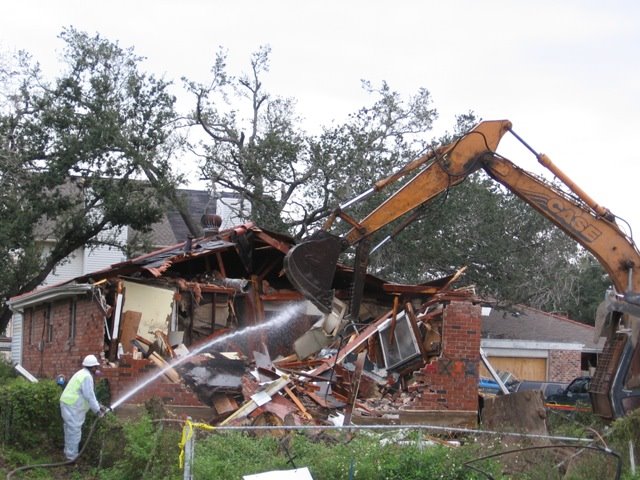
One of the stories I wrote (Perkins fed me data)
Color your stress and paddle it away instead of pounding dirt
By 1st Lt. Cheryl Perkins and Dave Harris
Novelty morphed into science as yesteryear’s mood ring evolved into a card that Louisiana Recovery Field Office staffers can use during their tedious 12-hour days to measure the color of their stress with their thumbs.
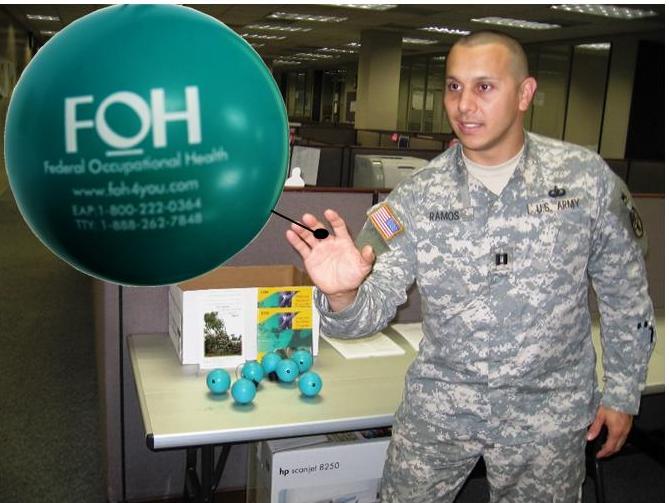
Counseling can help, but so can devices handed out to employees—a stress-reducing ball on an elastic string, using the hand instead of a paddle to enable employees to take out their frustrations on the ball instead of pounding dirt. And a business-card size thumb sensor to color-code stress levels (not suitable for the color-blind).
The sensor narrows a verdict spectrum, from high stress, mild, low or no stress. Employees need not make “no stress” a goal, since at least one prominent psychologist, well, stressed that “the absence of stress is death.” He said that one experiences both good stress and bad, and the good stress produced by working hard at something one loves enhances a healthy lifestyle.
FEMA has contracted with Federal Occupational Health to provide employee assistance programs—EAP—available to Corps employees and contractors. Crisis counselors staff a national call center to help individuals deal with not just the bad work-induced stress, but also depression, alcohol and drug abuse, financial woes, anxiety, sleep problems, marital tensions and domestic violence—all situations threatening health and well-being.
“Fifty-five EAP centers were established immediately following Hurricane Katrina,” said Cari Edwards, stress counselor and a FEMA contract employee. “The number now is down to three—New Orleans, Baton Rouge and St. Charles.”
Edwards has worked with the stress management team since the beginning of the disaster. “Corps personnel affected by the storm and working 69-plus hours a week, with no home, trying to rebuild, needing supplies such as groceries and other personal items begin to suffer from stress associated with the disaster and daily routine tasks,” she said. “I go out to the worksites and areas to do presentations, distribute handouts and brochures and provide a phone number for the employee assistance hotline (1-800-222-0364).”
Law mandates EAP for government employees because the programs have proven to reduce negative behavior following high stress and crisis situations.
“Disaster work is challenging physically, mentally and emotionally,” said Capt. Richard Ramos, industrial hygienist for LA-RFO. “Our people are exposed to long hours in areas that have suffered total devastation. These experiences can have a cumulative effect on a person’s physical and emotional health. Stress management resources provide a valuable morale service to the workforce to minimize distractions from personal worries; the worker more effectively can focus on job tasks, avoiding mistakes and mitigating accidents.”
Captain Ramos hands out the stress ball and thumb sensors around the workplace. Edwards makes them available when one calls the hotline. She also produced stress-relieving tips on another business card addressing on-the-spot relaxation exercises, what to do if stuck in a traffic jam, how to manage time and feel at home away from home.
The captain coordinated with Mike Larkin, Transition Recovery Office safety manager for FEMA, to button down EAP benefits for the Corps of Engineers and contractors. Captain Ramos, part of the LA-RFO Safety Office team, confers with Larkin on stress-related safety hazards. -MORE-
EAP activity also includes intervention, management consultations, training and critical incident stress management.
For individuals, EAP offers an assessment after one or two sessions, sometimes on the phone. Education, brief therapy and consultation result from up to six sessions with the EAP counselor and, if needed, referrals in the community for ongoing outpatient counseling, medication or psychiatric evaluations, referrals for chemical dependency, financial counseling, legal support, crisis shelter or elderly care services.
Managers also can benefit from EAP, which offers consolation, referral and identification of behavior problems. These services are independent of employee-initiated inquiries. Employees can use the services in confidence, without fear of identification to supervisors. For managers, EAP can assist in assessing possible violence or harm and gives suggestions for handing change, employee morale and conflicts.
EAP can also train employees—newcomer orientation, initial supervisory training, health fairs and. Critical incident stress management offerings include pre-incident education, demobilization, one-on-one crisis intervention, debriefing after critical incidents and family support.
By 1st Lt. Cheryl Perkins and Dave Harris
Novelty morphed into science as yesteryear’s mood ring evolved into a card that Louisiana Recovery Field Office staffers can use during their tedious 12-hour days to measure the color of their stress with their thumbs.
Counseling can help, but so can devices handed out to employees—a stress-reducing ball on an elastic string, using the hand instead of a paddle to enable employees to take out their frustrations on the ball instead of pounding dirt. And a business-card size thumb sensor to color-code stress levels (not suitable for the color-blind).
The sensor narrows a verdict spectrum, from high stress, mild, low or no stress. Employees need not make “no stress” a goal, since at least one prominent psychologist, well, stressed that “the absence of stress is death.” He said that one experiences both good stress and bad, and the good stress produced by working hard at something one loves enhances a healthy lifestyle.
FEMA has contracted with Federal Occupational Health to provide employee assistance programs—EAP—available to Corps employees and contractors. Crisis counselors staff a national call center to help individuals deal with not just the bad work-induced stress, but also depression, alcohol and drug abuse, financial woes, anxiety, sleep problems, marital tensions and domestic violence—all situations threatening health and well-being.
“Fifty-five EAP centers were established immediately following Hurricane Katrina,” said Cari Edwards, stress counselor and a FEMA contract employee. “The number now is down to three—New Orleans, Baton Rouge and St. Charles.”
Edwards has worked with the stress management team since the beginning of the disaster. “Corps personnel affected by the storm and working 69-plus hours a week, with no home, trying to rebuild, needing supplies such as groceries and other personal items begin to suffer from stress associated with the disaster and daily routine tasks,” she said. “I go out to the worksites and areas to do presentations, distribute handouts and brochures and provide a phone number for the employee assistance hotline (1-800-222-0364).”
Law mandates EAP for government employees because the programs have proven to reduce negative behavior following high stress and crisis situations.
“Disaster work is challenging physically, mentally and emotionally,” said Capt. Richard Ramos, industrial hygienist for LA-RFO. “Our people are exposed to long hours in areas that have suffered total devastation. These experiences can have a cumulative effect on a person’s physical and emotional health. Stress management resources provide a valuable morale service to the workforce to minimize distractions from personal worries; the worker more effectively can focus on job tasks, avoiding mistakes and mitigating accidents.”
Captain Ramos hands out the stress ball and thumb sensors around the workplace. Edwards makes them available when one calls the hotline. She also produced stress-relieving tips on another business card addressing on-the-spot relaxation exercises, what to do if stuck in a traffic jam, how to manage time and feel at home away from home.
The captain coordinated with Mike Larkin, Transition Recovery Office safety manager for FEMA, to button down EAP benefits for the Corps of Engineers and contractors. Captain Ramos, part of the LA-RFO Safety Office team, confers with Larkin on stress-related safety hazards. -MORE-
EAP activity also includes intervention, management consultations, training and critical incident stress management.
For individuals, EAP offers an assessment after one or two sessions, sometimes on the phone. Education, brief therapy and consultation result from up to six sessions with the EAP counselor and, if needed, referrals in the community for ongoing outpatient counseling, medication or psychiatric evaluations, referrals for chemical dependency, financial counseling, legal support, crisis shelter or elderly care services.
Managers also can benefit from EAP, which offers consolation, referral and identification of behavior problems. These services are independent of employee-initiated inquiries. Employees can use the services in confidence, without fear of identification to supervisors. For managers, EAP can assist in assessing possible violence or harm and gives suggestions for handing change, employee morale and conflicts.
EAP can also train employees—newcomer orientation, initial supervisory training, health fairs and. Critical incident stress management offerings include pre-incident education, demobilization, one-on-one crisis intervention, debriefing after critical incidents and family support.
Subscribe to:
Posts (Atom)